Tuesday, March 16, 2010

BBA Challenge Ciabatta: This Bread Has Expensive Tastes

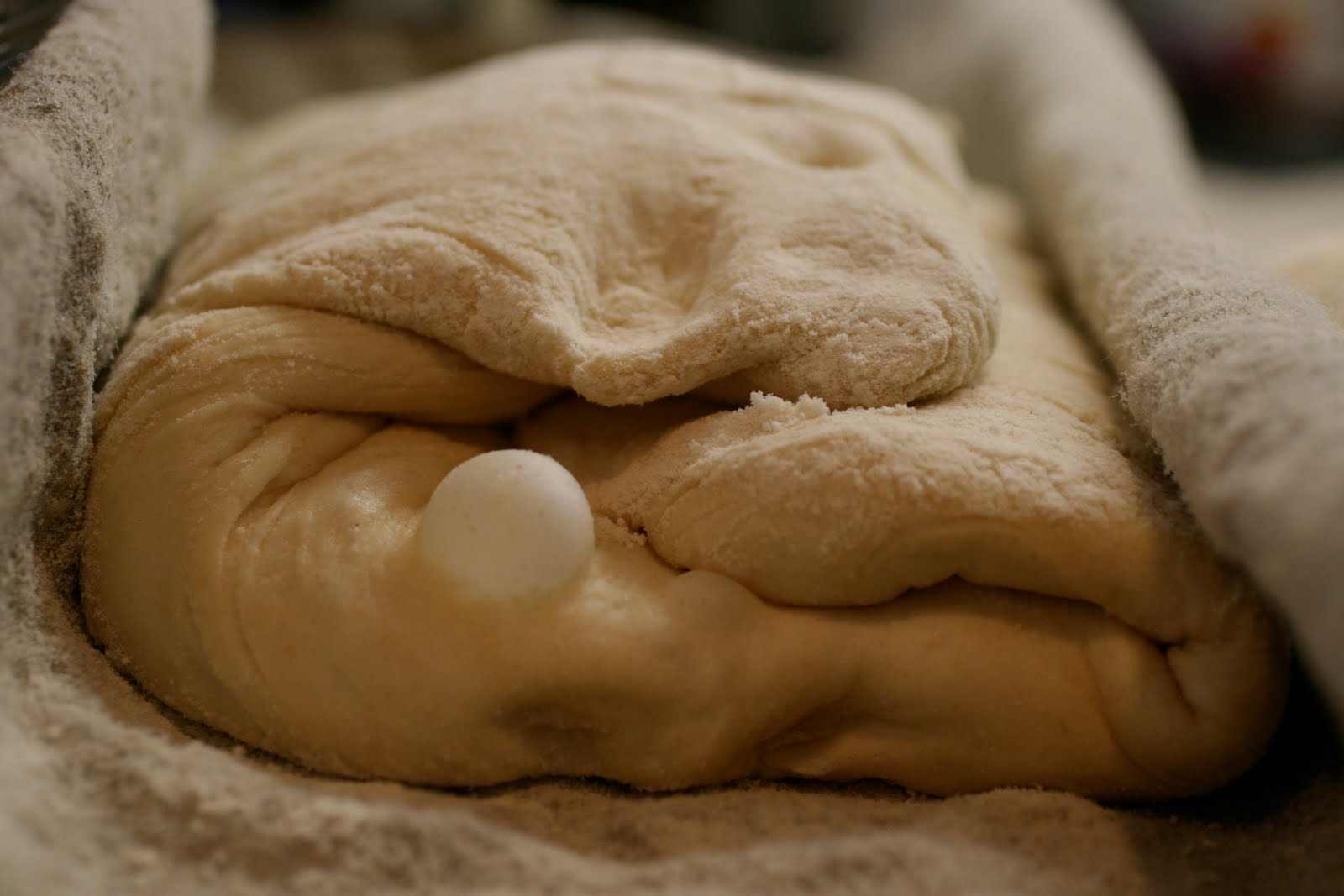
Ciabatta, All Cuddled In Its Couche


When I first began this bread baking hobby, I was certain it would be a very frugal pursuit -- perfect for the recession and my new status as a (mostly) stay at home mom. Indeed, unlike some of my hobbies (Triathlon, I'm looking at you!), baking has required very little equipment acquisition. So far, I've only invested in a plastic dough scraper and a single yard of linen for a couche. Total cash outlay: $13.10

But it turns out that my bread has expensive tastes. As soon as it pops out of the oven, it starts demanding things. Not unlike the proverbial buns that popped out of my own personal oven.

First, it was the bagels. They cried out for lox. Not just lox-flavored cream cheese. The real deal. Then it was the brioche. It insisted on being slathered with the finest European butters. And now, the ciabatta. I was at the Ferry Building Farmer's Market on Saturday morning when I wandered beneath the tent of the Happy Girl Kitchen Co., home to all good things pickled and preserved. There, I tasted the most deliciously tart, deep-red raspberry jam. I thanked the friendly jam person for the sample, disposed of my biodegradable tasting spoon in the proper receptacle, and began to walk away. But before I could, I heard a little voice saying, "Pleeease. It's my favorite!" Yes, it was the ciabatta talking. (I may be slightly disturbed). Who was I to deny the ciabatta its one true desire? So I plunked down $10 and walked away with a tall, slender jar of jam carefully cradled in my cloth grocery sack.


And the ciabatta was happy.

Who knows what those cinnamon buns are going to ask for?


Monday, March 15, 2010

Bagel Monday With Sour Flour

I got out of my kitchen this weekend, but I didn't leave the baking behind. Instead, I headed over to Sour Flour, the bakery and brainchild of San Francisco native Danny Gabriner.


I heard about Sour Flour from a friend, after I mentioned my recent adventures in bread baking. I was immediately intrigued by Sour Flour's plan to give away 1,000 loaves of handmade bread. Why give away so much bread, you ask? It's all part of Sour Flour's mission to "build community through bread." As a bread lover, I can't imagine a better foundation for building community. Sharing bread is such a natural instinct. When I bake bread, I want to give it to friends, leave it on my neighbors' doorsteps, or just bring it to the park up the street and start forcing it on strangers.

Now that Danny has given away 1,000 loaves, he is planning to sell 1,000 loaves (I bought #31--they're numbered, like collector's editions!) He says he enjoyed giving away bread so much, that he is just slowly warming up to the idea of exchanging his bread for cash. But it's part of the plan to turn Sour Flour into a flourishing business.

One of Sour Flour's traditions is Bagel Monday. They prep a load of bagels on Sunday afternoon, boil and bake them on Monday morning and give them away to whomever wants them. Anyone is welcome to lend a hand to the process, and get a baking lesson along the way. After my first experience with homemade bagels, I was eager to get my hands on more. I was also eager to bake with someone else. Up until now, Peter Reinhart, as channeled through the Bread Baker's Apprentice, has been my primary teacher. So baking with Danny was a reminder that there are many, many ways of doing things.

I showed up in the Sour Flour kitchen on Sunday, and the first thing Danny did was whip out his calculator. This was my first time seeing baker's math in action. Up until now, I have studiously averted my eyes from the discussion of baker's math in the BBA, and simply followed the formulas as written. Do I have an irrational fear of numbers dating back to Mrs. Blossom's fifth grade math class? Why, yes, I do. Danny, on the other hand, was clearly at ease with baker's math, his fingers flying over the flour dusted calculator, as he figured how much flour, water, salt and starter would be needed to make 64 bagels.

He takes a very relaxed approach to developing the gluten in his dough. He gives it a lot of fermentation time, and stretches and folds the dough (much like the method for prepping ciabatta dough), instead of pummeling it into submission. I am usually under a time crunch when I'm baking -- the kids need to be picked up, dropped off, fed or put to bed -- so I do a lot of pummeling. So it was refreshing to see someone work with his dough for a few minutes, and then walk away and let it do some of the work on its own.

It was also my first time working with a sourdough starter. It definitely brings a whole new level of depth and complexity to the party. It also brings me down a road I never thought I'd travel. You see, I must make a confession: I really don't like sourdough bread. Forgive me. I had some traumatic experiences with stale loaves of Boudin Sourdough bought off of Chicago-area supermarket shelves in the 80s. But it turns out that not all sourdough has to be so painfully, well, sour. The bagels from Sour Flour may have saved me from a lifetime of bitterness.

When I returned Monday morning to pick up a bag of bagels, they were still warm from oven. They only had a hint of sour flavor, which added a nice layer of complexity to the bagels, along with the salt and poppy seeds sprinkled on top. I enjoyed them, almost as much as Alex and Rowan, who came along to"see mommy's bread teacher." Danny's brother helped Alex pick lemons from the tree in their sunny back yard. What a generous family. Danny obviously has a great passion for bread, and sharing the love far and wide. I can't wait to taste more bread and bagels from the Sour Flour Lab.
Monday, February 08, 2010

BBA Challenge: A Little Magic On A Sunday Morning

One week, two breads. Brioche and Challah. Okay, I'll say it. They were okay. But they weren't great. I was a little underwhelmed after my bagel experience. They weren't complete failures, they just each had their...issues.

The Bread Baker's Apprentice includes three brioche recipes, which vary according to their butter content -- one for the Rich, one for the Middle Class, and one for the Poor. In a tiny, grudging nod to Kevin's diet, I decided to make the Poor Man's Brioche. Though it doesn't measure up to the rich variety, the formula still contains 23 percent butter. So while it was baking, the whole house was bathed in the scent of warm, buttery goodness. It even looked pretty good. But the texture was, well, a bit spongy. I'm not sure if that was a result of the balance of ingredients, or or if I worked the dough too long. It seemed a little rubbery before it went into the oven. Still, the brioche toasted up nicely for breakfast the next morning, and tasted even better with more butter slathered on top. It does seem sinful to add more butter onto a bread that already contains so much, but it just calls for it.

The Challah was my first effort at braiding bread. I've never even been able to braid my own hair, so I didn't have high hopes. But it was actually a pretty easy dough to work with. Alex even got his four-year-old hands into the mix.

The problem came in the baking. Our oven is a little like an opera singer. She is gorgeous, she fills up half the room, and she is wildly temperamental. To get her mood swings under control, we got into the habit of always using the convection setting. But I think the convection fired up my Challah way too quickly. By the time I checked the bread's internal temperature, it soared past the recommended 190 degrees. The braids came out shiny and golden (although slightly lopsided), but had developed a tough crust.

It still got a few oohs and aahs, especially as we filled the kids with warm bread just before sending them off to bed. But I didn't have to fight myself from eating it all at once. Which is, ultimately, the true test of a good bread.

With both brioche and Challah growing stale on our counter, I was loathe to let all that good dough go to waste. Croutons? Bread crumbs? Kind of boring. So, I mentioned to Kevin that perhaps we could whip up some French toast. Translation: HE could whip up some French toast. He is generally more perky and well equipped to whip things up on a Sunday morning. And whip he did. He turned those two so-so breads into something divine. He bathed the slices in a batter infused with vanilla and cinnamon, and fired up the griddle. (Here, his diet goes out the window. Sorry!) The slices of brioche were like souffles, with a thin golden crust. The Challah was a bit chewier, which appealed to the kids. It almost tasted too good for maple syrup. Almost.

Friday, February 05, 2010

Bread Baker's Apprentice Challenge: My Bagels, My Babies

I am suffering from a serious case of baker's pride. I can't believe I made bagels. And I can't believe how good they were.


I like my bagels chewy. But here in San Francisco, most bagels are pillowy, steamed, and as big as your head. So I was excited about Peter Reinhart's bagel recipe in the BBA, which he promised would be chewy and nothing less than a bagel "for the ages."

As I scanned the recipe, I was excited but a bit daunted. So many steps! Dividing! Shaping! Boiling! This was surely more complicated than a simple loaf of bread. I was also squeamish about working with "the stiffest dough in the bread kingdom". After my difficulties kneading the Anadama Bread, I figured I would have to work my arms off to get all of the bagel ingredients properly incorporated.

Up until now, I have been mostly mixing and kneading by hand, convinced that the best way to learn about bread dough is to handle it. But in order to save my arms, I figured it was time to bring my beloved KitchenAid mixer out for a spin. This appliance is beautiful to behold. It is all curves and shine, and lacquered in a syrupy coating of Martha Stewart mint green. I practically swoon every time I pull it out of the cabinet. Is this what car lovers feel like when they take their baby out for a spin?


Alas, the bagel dough was too much for my KitchenAid to handle. The ball of dough just kept whipping around the bowl, stubbornly refusing to pick up the extra flour that had pooled beneath it. So sadly, I tucked her away for another day.

I then threw the dough down on the counter and went to work. It took a lot of patience to get all of the flour evenly distributed, but it wasn't as difficult as I had anticipated. At this stage of my bread-baking career, I think that a stiff dough is actually easier to handle than a sticky dough, like the one for pizza. I shudder to remember how that turned out.

As I neared the shaping stage, my entire kitchen seemed to explode with people. My son and his friend came racing through. My daughter went toddling by. Our babysitter commandeered the stove to cook lunch. And two exterminators lay prone on the kitchen floor, trying to determine how one friendly little mouse had found its way into our house.

What was that about reducing distractions when you're baking?

Miraculously, I managed to shape the dough into bagel-like objects and stash them safely in the fridge for the night. I was already becoming infected with baker's pride. I got giddy every time I opened the fridge and caught a glimpse of my bagels.


One of the brilliant things about this recipe is that although it's a two day process, most of the hard work comes on day one. That means you can actually wake up at a reasonable hour on Saturday morning and make fresh baked bagels for brunch.

Which is exactly what I did. I practically popped out of bed at 7am, threw on a pot of water to boil, and cranked the oven up to 500 degrees. The bagels were done by the time Mickey Mouse Clubhouse was over.

Have I mentioned how good these bagels were? We ate them right out of the oven with nothing smeared on them. The crust was golden and crackly, and it gave way to a nice chewy interior. And the combination of sesame seeds and salt gave just the right boost of nutty flavor.

In the past, I have contemplated ordering bagels from H&H in New York. Now I don't have to. I can't wait to make these again. Who wants to come over for brunch?

Bread Baker's Apprentice Challenge: Celebrating, Greek Style

My family of completely unbiased bread connoisseurs declared the Greek Celebration Bread a success. I think they were seduced by the sweet aromas of honey, cinnamon and other spices that filled the house. The bread was also impressive to look at, like one of those giant golden eggs from Charlie and the Chocolate Factory:


But at the beginning, I wasn't sure I was going to end up with anything special, or anything resembling bread. I feared I was headed for a repeat of the great pizza debacle.

I mixed the ingredients in the bowl, as instructed. I then plopped it on the counter to begin kneading, but it was still so sticky, I immediately scraped it up and returned it to the bowl. Then I added more flour. And more flour. And more flour. I have no idea how much.

Ultimately, I did end up with a ball of dough that seemed both "tacky and supple." But I used a lot more than the 16 oz outlined in the formula. It's a bit puzzling to me, because I've always heard baking described as a science. "You must follow the instructions exactly or your bread/cake/souffle will be a failure!" The formulas in the BBA are obviously carefully calibrated -- you're instructed to use .03 oz cinnamon here, 2.67 oz honey there. But in the end, you are advised to "add more milk or flour as needed." Why so wishy washy all of a sudden? I need guidance!

Let me say here that I've always been fond of rules. I like the security, and the implied promise that success lies at the end of a well mapped path. It's why Cook's Illustrated is one of my favorite kitchen companions. They screwed up the recipe hundreds of times so I don't have to! Just like in science class, you gather together your powders and your liquids, along with your test tubes and Bunsen burners; you follow the instructions and viola, you get the prescribed result.

But bread baking appears to be less like science class and more like real science. You experiment with doing things one way. Sometimes it works. Sometimes it doesn't. And when it doesn't, you tinker around and you experiment again.

Now, I'm quite certain that the pros at Acme and La Brea have everything precisely mapped out. In order to turn out those same perfectly delicious loaves time after time, the bakers must control every little detail: ambient temperature, type of flour, humidity, etc. I don't think I'll ever have that level of control over my own loaves. But I do think I will learn more about my own little kitchen microclimate, and how it affects the bread baking process. Hopefully that will make me less angsty when greeted with instructions like "add more milk or flour as needed."

Sunday, January 24, 2010

BBA Challenge: Well, That Didn't Take Long

Two recipes into my bread baking adventures, and already I've had my first disaster. It wasn't actually bread, it was pizza. But still.

The second bread in the BBA Challenge is Greek Celebration Bread. But since I've never eaten Greek Celebration Bread, I didn't feel inspired to bake it. But there is one thing in the BBA that I have eaten plenty of: pizza.

As a Chicago girl, my love of deep dish runs deep down in my bones. But I have also fallen in love with the thin, chewy crusts that chefs are turning out of blazingly hot wood-fired ovens all over San Francisco. How could I not? I live at the epicenter of Pizzeria Delfina, A16, Pizzetta 211, and Pizzeria Picco.

So, I skipped a hundred or so pages ahead in the BBA and got to work on Pizza Napoletana. Like lots of BBA breads, it's a two day process. Kevin wanted to know, "Why two days when 75 minutes is good enough for those slackers over at Cook's Illustrated?" But I have been seduced by Peter Reinhart's promise that extra long fermentation would equal great flavor. I mean, who wouldn't want to experience THE BEST PIZZA DOUGH EVER?

With Friday night pizza on my mind, I set out Thursday afternoon to get the dough started. I knew immediately that something wasn't quite right. The dough was so wet that no amount of flour could keep it from sticking to my hands. I finally wrestled the beast into six semi-equal sized balls and set them into the refrigerator for the night. Meanwhile I said a little prayer to the pizza gods.

Alas, my prayer went unheard. I set the balls on the counter to warm up, but they showed little life. I then brought Kevin in for the next step, as he is the pro pizza shaper in our house. He was even eager to try tossing the dough. But there would be no tossing. As soon as he tried to stretch the dough, it came apart in his hands.

So, with a counter full of toppings (carmelized onions, roasted red peppers, sauteed mushrooms) and two hungry kids, I did what I had to do. I sent Kevin out into the wilds of Whole Foods for some premade pizza dough. Of course, he forgot his wallet and had to return to the store to buy the stuff. That really made the night complete.

After two hours of attempts, we finally sat down to homemade pizza. Perhaps it was just the bitter taste of defeat, but it still didn't taste all that great. On top of the dough disaster, I don't think the oven ever got hot enough.

So, where did I go wrong? Let me consider the ways. I should have used high gluten flour. I should have left out the oil. I should have added more flour until the dough became workable.

I don't have enough experience to know exactly why things went awry. I do know that in bread baking, I need to get to be equal parts artist and scientist. Hopefully, as I tackle more breads, I will develop the touch and the know-how I need to analyze and fix problems as I go along.

Giddy from my success with the Anadama Bread last week, I was confident that pizza would be just as easy. Like Icarus, I flew too close to the sun and my wings melted from the heat. Or, my dough melted from the moisture. So, in honor of Icarus, I am returning to BBA Challenge bread number two: Greek Celebration Bread. Here's hoping we have a loaf less tragic.

Sunday, January 10, 2010

BBA Challenge: Getting My Mise En Place

I had my first adventure in bread land this weekend. Like other BBA Challengers, I took on Anadama Bread, the sweet little bread with the strange name.

I was anxious before I started because I was certain I would screw something up. My anxiety grew after reading Peter Reinhart's emphasis on mise en place, the importance of getting all your ducks in a row before you set out to bake. It wasn't the weighing and arranging that intimidated me, it was this passage from The Bread Baker's Apprentice:

"Mise en place is as much a mental organization as it is about scaling ingredients. Arrange to have as few distractions as possible, or factor them in as required. Minimize conversation, or you will surely make mistakes and forget an ingredient. Success in bread making, as in any facet of life, comes down to one word: focus."

Now, I know this from experience. I once forgot to add baking soda to a batch of Madeleines, and instead of golden fluted cakes, I ended up with a pan of rubbery gray door stoppers. And I envy the stylish mise en place of Ally at Goldphishe, who ended up with some divine looking cinnamon buns.

But I'm not sure I live a mise en place kind of a life. I've got two delightful little distractions, who need to be fed, wiped, and entertained constantly. "Focus" is not the first word I would use to describe my normal state of mind. I feared that failure to get my mise en place would be a massive road block on the road to baking glory.

The corn meal soaker in action.

I did manage to get the corn meal soaking overnight without too much trouble. But day two was a little trickier, schedule-wise. For all future baking endeavors, I would add these helpful bullet points to Peter Reinhart's Mise En Place Checklist:

  • Sweet talk husband into taking child number one to see "Alvin and The Chipmunks: The Squeakuel." Promise him delicious bread as payment.
  • Hypnotize child number two into taking a three hour nap.
It's a good thing she slept that long, because kneading took at least 30 or 40 minutes, not the 10 minutes alluded to in the book. I think I may have been a bit too dainty with the dough. As the dough failed one window pane test after another (ie, didn't develop enough gluten), and the internal temperature hovered below the desired 77-81 degrees, my frustration grew. I took that frustration out on the dough, and with one final burst of violent kneading, it was ready to ferment.

The rest of the steps went well, but the long kneading meant I was behind schedule, and the bread was going to have to compete with dinner for oven space. So, between proofing, baking and cooling, the bread was finally ready to eat as the kids were heading off to bed. Alex loves bread as much as I do, and had been looking forward to this moment all day. So before he brushed his teeth he padded into the kitchen in his fire truck pjs. As he munched on a slice of golden brown bread slathered with butter, he looked up at me with a huge smile and said, Yummy!

I had to agree. The flavor was sweet, the texture was tender, and it had a nice bite, thanks to the corn meal. I wasn't sure I loved the molasses flavor at first, but it definitely grew on me. And besides, everything tastes better with butter!


The next bread in the BBA Challenge is Greek Celebration Bread. But I'm feeling tempted to skip that step and go straight to bagels. In the meantime, we'll be enjoying our Anadama toast and turkey sandwiches.

Thursday, January 07, 2010

The Bread Baker's Apprentice

I am rescuing my blog from cyber obscurity. Okay, let's be honest. It's still obscure, but I plan to write on it anyway. I conceived this blog to document my love affair with bread. So far, it's been a one way affair.

In my life, I have savored enough delicious bread to make Dr. Atkins and his acolytes choke on their bacon. But as a baker of bread, I have fallen far short. Sure, I may have made one or two lackluster loaves. And one of my first culinary experiences involved popping open a can of Pillsbury Crescent Rolls. But I am leaving my fond memories of the Pillsbury Dough Boy in the past. My new man is Peter Reinhart. Each night I curl up with him and his book, The Bread Baker's Apprentice, and I dream of the bagels, baguettes and ciabatta that will one day burst from my oven.

Of course, I may be overreaching a bit. I am a complete novice, and this book is heavy on things like pre-fermentation and formulas that take two days. But I have found additional inspiration in the form of the Bread Baker's Apprentice Challenge, an insane batch of bakers from all around the world who have devoted themselves to making every bread featured in the BBA. I have been lurking on blogs, Twitter feeds and Facebook pages devoted to the BBA Challenge, and I have found both inspiration and practical advice. While some bakers tell of loaves that succeeded beautifully, others share their failures or things that didn't turn out as planned.

I hope for some success, and expect my share of blow ups (not literally, I hope, but I did read of one ciabatta that went boom). If I succeed, our family will feast joyously on homemade bread. And if it doesn't work out, I can always run down the hill for a loaf from Acme, Bay Bread or La Brea.

Wednesday, October 19, 2005

Breads I Have Loved And Lost

The Meetinghouse Biscuits Are Coming Back! I told my husband this twice in one day and he accused me of being a bit overwhought. I can't help it. Ever since the lovely and warm Meetinghouse went out of business, I have mourned their California comfort food, but I have mourned nothing more than their biscuits. So you can imagine my excitment when I read a little newspaper clipping posted in the window of the Elite Cafe on Fillmore Street, which is closed temporarily while new owners get it off the ground. Apparently, Joanna Karlinsky, the new chef and co-owner, is a Meetinghouse veteran and she is bringing the blessed biscuits back. Oh joy. I will fall asleep tonight dreaming of them.